What are the benefits of interior planting at airports?
Last updated on: 14 July 2026
Interior planting in airports supports a relaxed, positive travel journey by cultivating a soothing ambiance for passengers. Furthermore, a green, inviting environment enhances passenger satisfaction, elevating stay quality and enriching the retail concourse experience. Living plants, replica greenery, and living walls transform high-traffic terminals into comfortable, welcoming spaces.
Why planting is essential to the passenger experience
Airports and air travel can be fast-paced and demanding environments. Passengers frequently navigate delayed flights, extended layovers, or terminal reconfigurations. Strategic airport spatial design plays a vital role in mitigating this pressure, creating a polished, highly representative setting for travelers and operational personnel alike.
Impact on atmosphere and retail experience
An inviting atmosphere supports passenger well-being and enhances dwelling comfort. Independent airport satisfaction research by J.D. Power and Associates highlighted this connection:
"When passengers reported high satisfaction with an airport, they tended to spend more time and resources in the retail and concession areas."
Interior landscaping serves as a strategic design tool for architects and space planners to optimize the passenger journey and elevate the visual appeal of airport retail concourses.
Our experts on the power of biophilia
In commercial practice, introducing botanical features into expansive public infrastructure significantly enhances occupant experience. Our specialists leverage the principles of biophilia—the innate human desire to connect with natural systems.
From extensive industry experience, we know that strategically installed interior greenery delivers clear operational advantages:
- Visual respite and comfort: Planted zones provide tranquil visual anchors in stimulus-dense terminal halls.
- Acoustic attenuation: Large specimen plants and living green walls help absorb ambient sound bounce across high-ceilinged spaces.
- Natural wayfinding: Strategic plant placement guides passenger flow and pedestrian traffic intuitively through transit zones.
- Flexible aesthetic solutions: In areas with limited natural daylight, premium replica planting offers a practical, low-maintenance alternative.
Case study: Vancouver International Airport (YVR)
An international success story for Ambius is the interior planting at Vancouver International Airport (YVR). This project was designed by Ambius designer Joanne Craft, in close collaboration with international architect Nancy Stern. Together, they brought the outdoors inside at this Canadian airport.
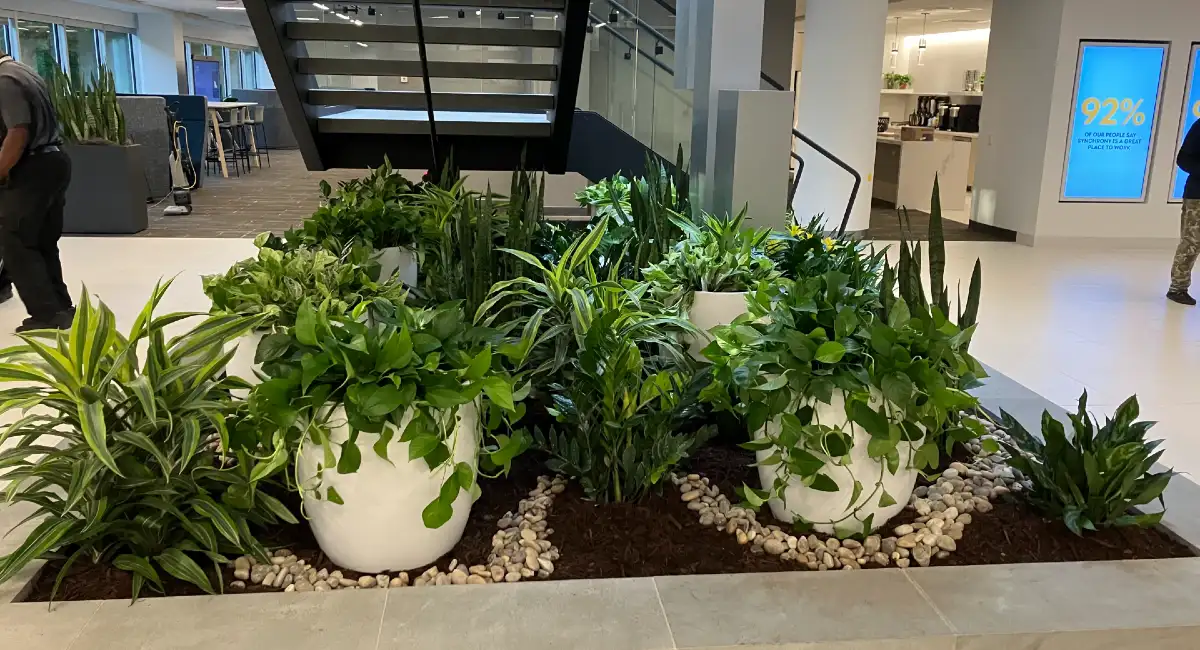
Nancy Stern explains the concept:
"All the architecture at Vancouver International Airport seems to celebrate the natural beauty and cultural heritage of British Columbia, with each part of the airport reflecting a specific geographical region."
Scientific foundation
Ambius designer Joanne Craft selected plant palettes grounded in biophilic design principles, sharing her insight on their commercial efficacy:
"American biologist Edward O. Wilson pioneered the concept of biophilia, defining it as the innate tendency of humans to focus on life and lifelike processes. Wilson detailed how people naturally thrive in environments featuring organic elements. Incorporating planting into airport design supports passengers in feeling more relaxed, comfortable, and grounded."
The results of this green partnership speak for themselves. The airport won several prestigious awards thanks in part to this unique experience:
-
Airport of the Year: In 2016, Vancouver International Airport won this award for the seventh consecutive year as the best airport in North America.
-
Best Airport in the World: The CAPA Centre for Aviation (CAPAC) also named YVR the best airport in the world in 2016.
Professional care and maintenance
Maintaining vitality and flawless presentation across airport greenery requires specialist horticultural management. Our service technicians assume total operational responsibility for plant care. Through scheduled health inspections, precise nutrient management, and expert maintenance, we ensure your planting remains in optimal condition—preserving a world-class presentation for global travelers.