What is the effect of interior landscaping on the indoor climate?
Last Updated: 11 June 2026
Interior landscaping supports a comfortable indoor environment and boosts humidity levels. While plants absorb certain compounds in laboratory settings, a well-balanced ventilation system remains decisive for effective air exchange in the workplace.
Prioritizing a comfortable indoor climate
Indoor climate quality is a key point of attention in many cities and office buildings. Because employees spend a large part of their working day indoors, the environmental quality directly impacts workplace comfort. A well-regulated indoor climate contributes to overall comfort, atmosphere, and the general workplace experience.
Where do petrol fumes in the workplace originate?
In locations near busy roads or multi-storey car parks, indoor climate quality is an important consideration for facilities managers. The indoor climate is influenced by factors such as mechanical ventilation, temperature, acoustics, and interior design choices.
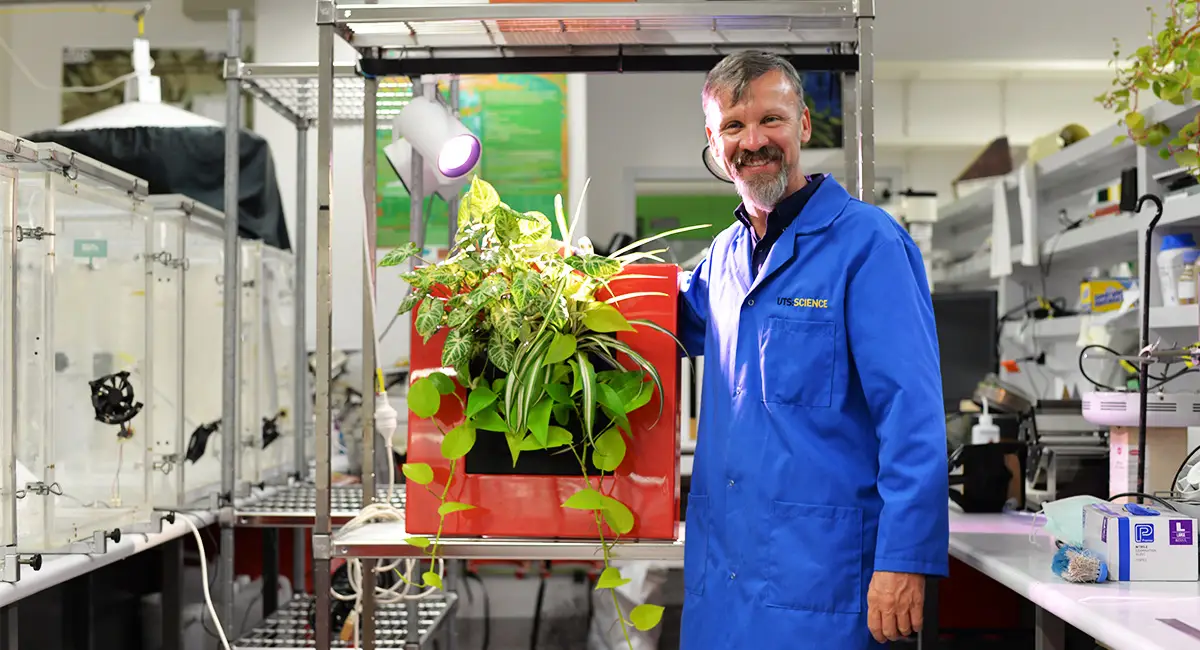
The Scientific Research by Ambius and UTS
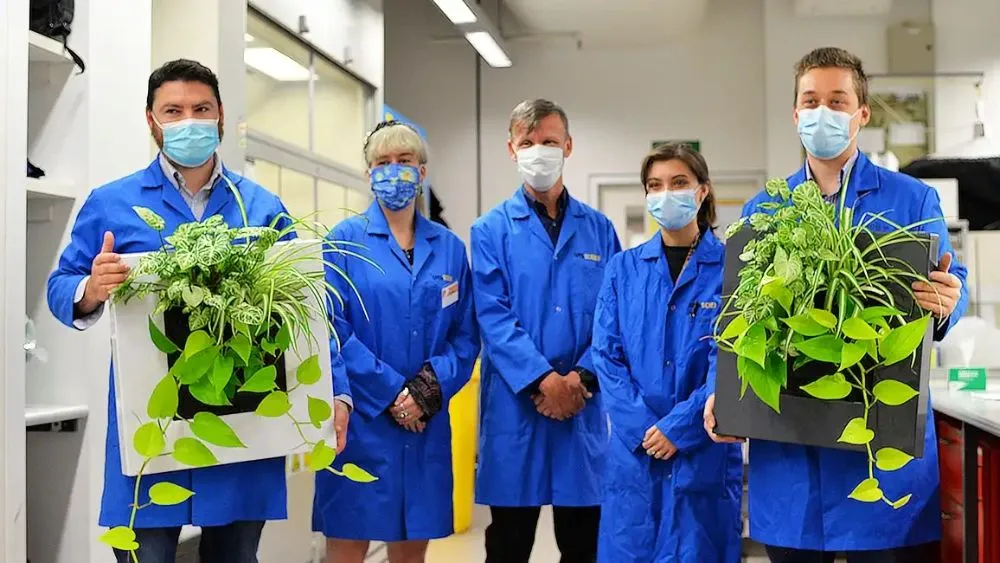
Previous studies have examined the interaction between plants and volatile organic compounds (VOCs). To build on this, Ambius collaborated with the University of Technology Sydney (UTS), led by Associate Professor Fraser Torpy.
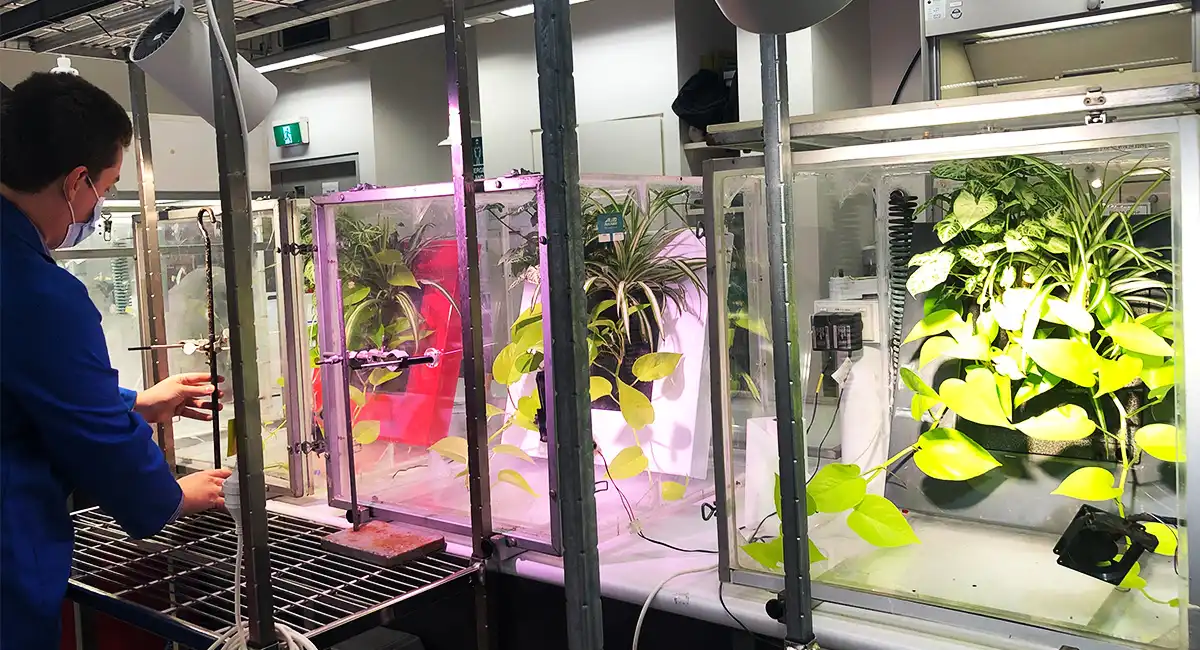
The study used a specific vertical planting system in a controlled testing environment: the Ambius LivePicture GO; a wall-mounted living frame holding 4 plants. The plant selection featured a specific mix of:
- Scindapsus aureus (Devil's Ivy)
- Syngonium (Arrowhead Plant)
- Chlorophytum (Spider Plant)
During the experiment, the setups were placed in sealed, controlled laboratory chambers, where the concentration of various chemical compounds was precisely measured over an 8-hour period.
Laboratory study findings
Measurements inside the sealed test chambers demonstrated a decline in the concentration of the introduced compounds over the testing window. This provides valuable insight into how plants interact with specific airborne substances within an enclosed space.
The study observed that certain compounds decreased in concentration more rapidly than others. For instance, in the test setup, measured levels of benzene declined faster than those of alcohol.
Practical insights
In our daily practice, we see that planting instantly enriches the atmosphere in the workplace. When our service technicians install planting in buildings, we notice that it creates an inviting and well-maintained appearance throughout the space. Plants contribute to a comfortable environment and an inspiring workplace.
Would you like tailored advice on interior landscaping for your business? Please feel free to contact us.