What is the new workplace trend?
The defining workplace trend is biophilic design, positioning living plants, natural daylight, and fresh air at the heart of corporate interior design. This design philosophy focuses on occupant experience to support relaxation and enrich the daily working environment. Integrating organic forms, textures, and biophilic patterns creates an inviting, inspiring workplace.
The evolution of the working environment: from open spaces to cellular offices
Office designs change constantly due to technological advances, economic growth, and the need for new resources. To understand current trends, it is important to look at how our modern working environment originated. Below, you can read how office layout has developed since the 1950s.
The open-plan office of the 1950s
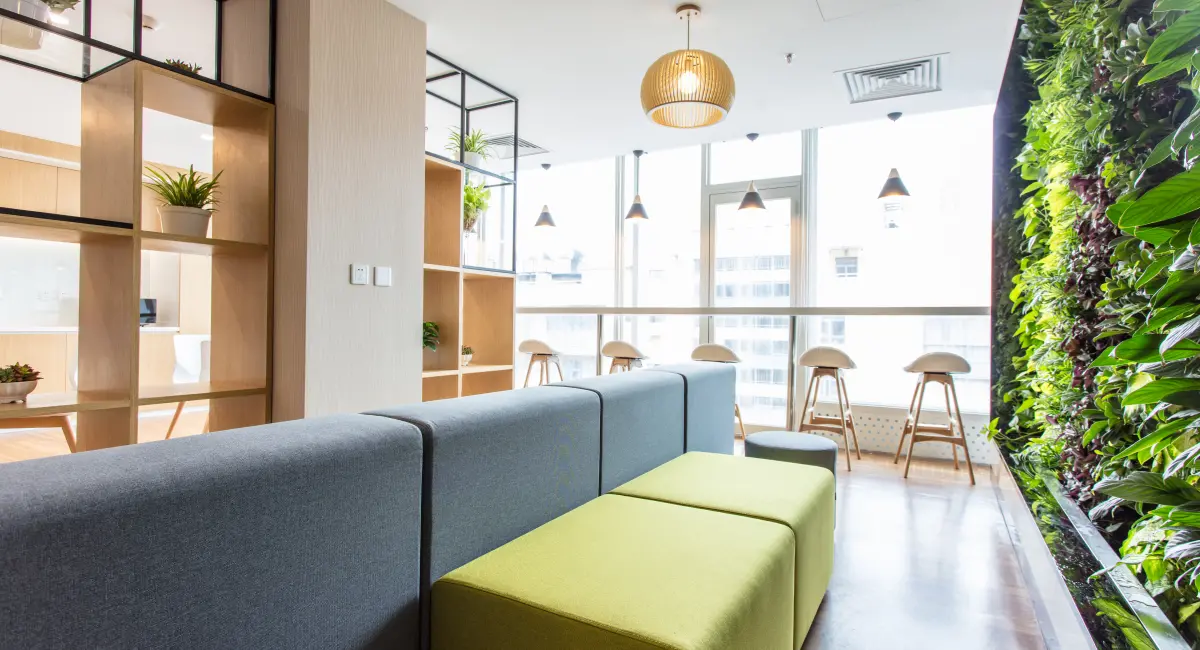
In the 1950s, buildings were designed to be completely self-sufficient and separated from the outside world. Fluorescent lighting and air conditioning replaced natural sunlight and fresh outdoor air. This era also saw the development of the open-plan office; a foundation that is still widely used today.
The rise of cellular offices in the 1980s
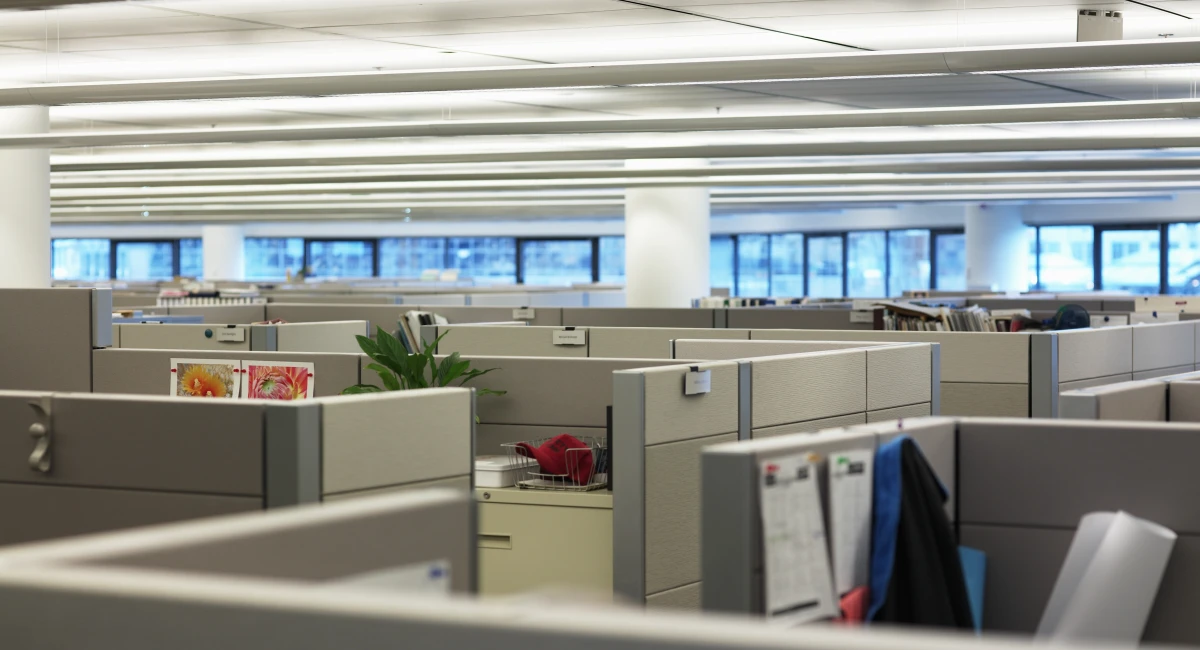
In the 1980s, technology took a massive leap forward, leading to a new layout for the working environment. The focus shifted toward open communication, profitability, and lean procedures. This resulted in the well-known cubicle or cellular offices.
Spaces from this era were characterised by a grey, sterile appearance where efficiency came first. Lines were rigid. Furthermore, office plants or murals were barely used. Although these cellular offices were partly replaced by renewed open-plan layouts in the 1990s, they continue to play a role in office environments worldwide.
What does biophilic design involve?
Today, the market is undergoing a shift into the era of biophilic design. This trend goes beyond a mere arrangement of furniture; it has a major influence on contemporary architecture and commercial building practices.
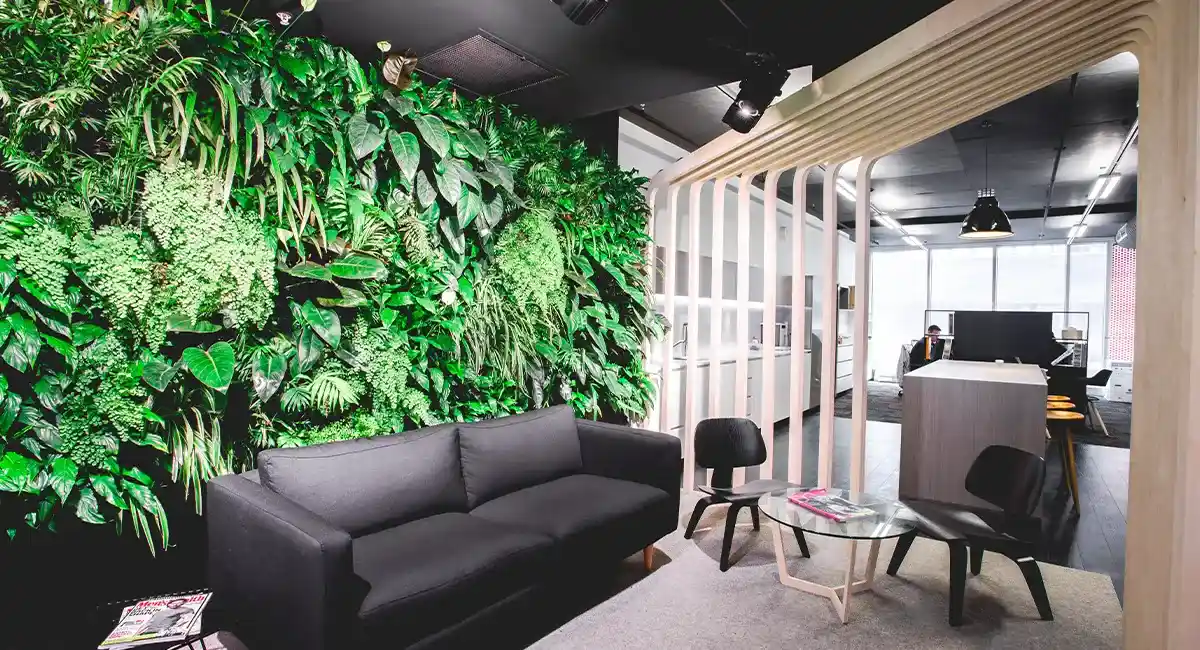
Biophilic design revolves around the total experience of the space, the working environment, and the building. It is about how you experience the space, what you see, and how it makes you feel. Because humans are naturally closely connected to nature, this design brings those natural connections back into the building. This includes the following aspects:
- Daylight: There is a sufficient influx of natural light into the space.
- Planting: You enjoy the presence of office plants and views of greenery.
- Natural ventilation: The supply of fresh air ensures an optimal climate.
- Mobile workplace: The design encourages movement, such as walking and using the stairs.
When you are exposed to these natural shapes and patterns in the working environment, your body and mind respond as if you were in real nature.
Why biophilic design is so valuable
The rise of biophilic design builds upon the architectural developments of the late 1990s and early 2000s, which prioritized energy-efficient building envelopes. Biophilic design represents the next evolution in sustainable architecture, focusing specifically on occupant comfort and spatial quality.
Traditional, monotonous workspaces can often feel cold and impersonal, negatively impacting workplace culture. Typical challenges include:
- A sterile, clinical appearance.
- A lack of visual variety, natural texture, and spatial dynamics.
- Disruptive sound bounce and acoustic discomfort.
Introducing biophilic elements fundamentally shifts how employees experience their environment. Leading multinational corporations and growing enterprises globally deploy this approach to elevate workplace culture and strengthen employee connection.
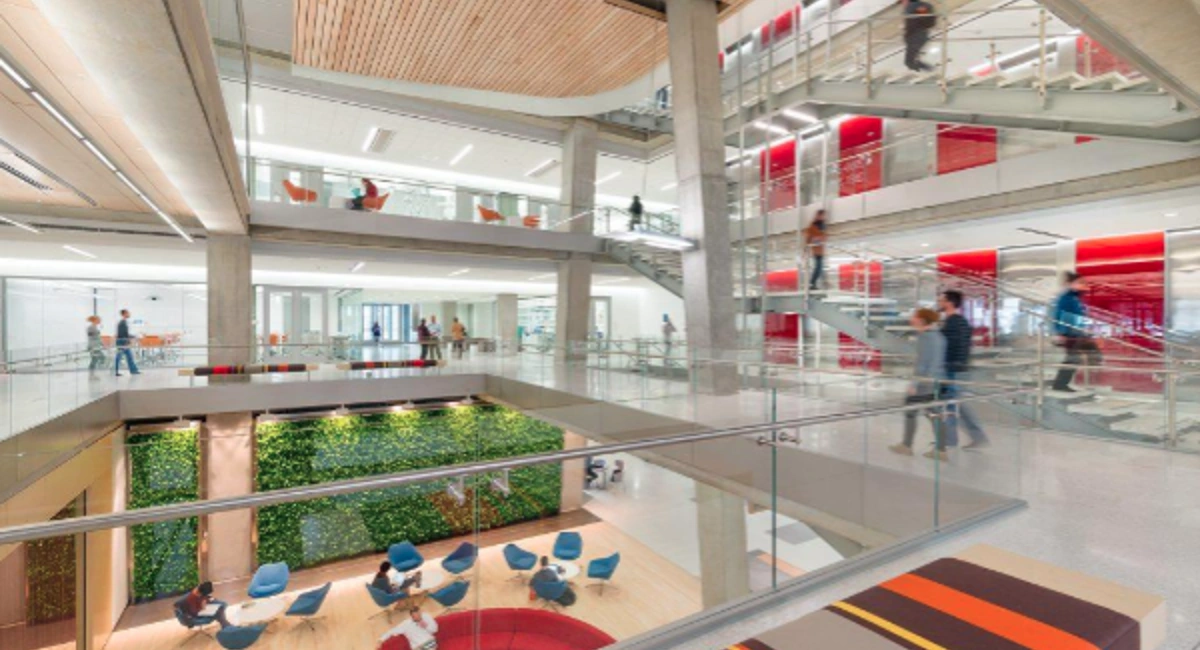
The benefits of plants in the workplace
Biophilic design delivers both psychological and spatial advantages. Incorporating foliage enhances workspace atmosphere and elevates corporate presentation. Below, our specialists detail the practical benefits of biophilic integration.
Expert Insights
"We consistently see that a thoughtfully designed office planting scheme instantly transforms corporate identity. In our experience, introducing specimen plant groups significantly elevates occupant perception, creating a noticeably warmer atmosphere for employees and visitors alike. Our service technicians carry out routine maintenance to ensure all displays remain in flawless condition. Should any plant show signs of decline, we assess its care requirements or arrange a prompt replacement in consultation with your facilities team."
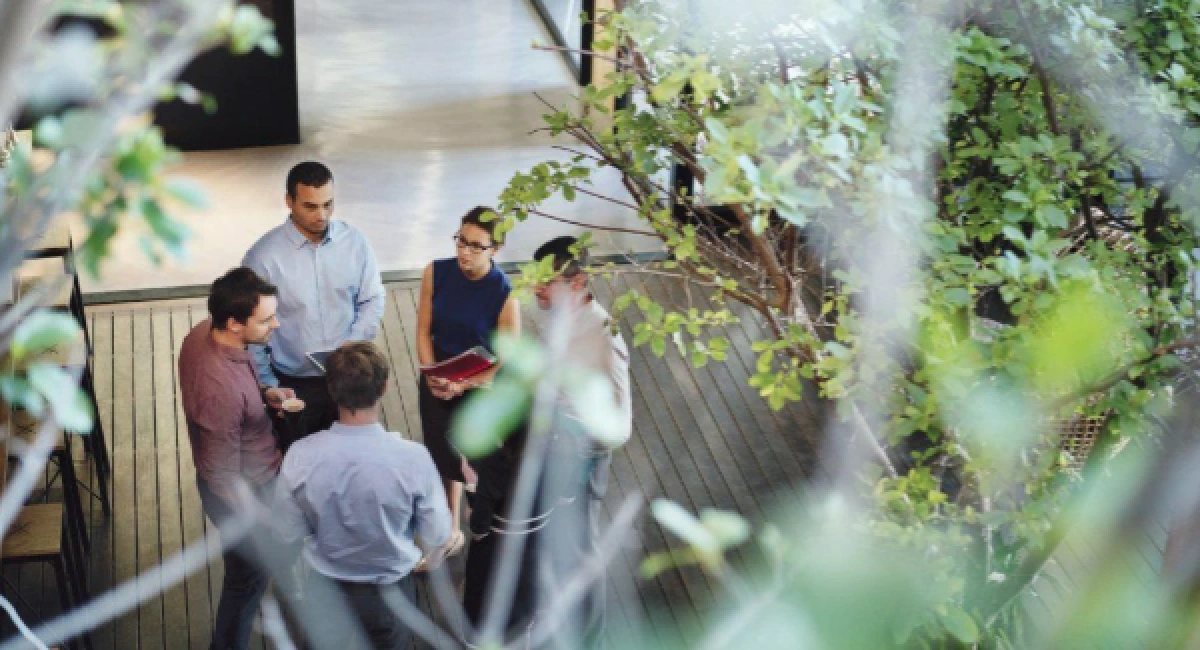
Key advantages of interior landscaping
Choosing professional interior landscaping enhances corporate property presentation and workspace quality. Here are the primary benefits at a glance:
- Visual calm: Fosters a sense of balance and tranquility across high-density floors.
- Welcoming ambiance: Provides employees and guests with a warm, sophisticated interior.
- Enhanced focus & experience: Supports daily concentration and enriches overall workplace perception.
- Visual balance: Softens rigid architectural lines, providing natural visual anchors.
- Distinguished working climate: Establishes an inspiring, high-end corporate environment.