Why plants need less water in autumn
In autumn, the water requirements of indoor plants change immediately. Shorter days and reduced natural light slow growth, prompting plants to enter a natural dormant phase. Both water uptake through the roots and transpiration via the leaves decrease significantly, meaning the substrate remains moist for much longer. Adding extra water during this period quickly leads to overly wet roots and plant damage.
Less light, lower activity Plants rely on daylight to produce energy and grow. While plants are fully active and consume substantial amounts of water during spring and summer, indoor greenery shifts into an efficient resting state in autumn:
-
Slower growth: Reduced light intensity slows the growth rate to conserve energy for spring.
-
Minimal transpiration: Roots absorb significantly less water, and leaf transpiration comes to a virtual standstill.
-
Longer moisture retention: In our hydroculture systems, clay granules remain moist for much longer due to low evaporation rates. If a plant receives the same amount of water in autumn as it does in summer, it risks developing root rot.
Why the water meter frequently stays on 'MIN'
Our planters come equipped as standard with a hydroculture system and an integrated water gauge. While the indicator drops quickly in summer due to high water absorption, autumn presents a different picture:
-
Essential oxygen absorption: To maintain a healthy root system, the substrate and base of the planter need periodic drying periods. Roots can only absorb sufficient oxygen during this dry phase.
-
Resting period prevents damage: A water gauge remaining at the minimum level ('MIN') for days or weeks in autumn is not a sign of dehydration. It is a vital resting period that prevents root rot and keeps the plant healthy.
"When the indicator is right at the bottom, people often want to water the plant straight away. It is an understandable reaction, but in autumn, extra water is harmful. The roots need that dry period to breathe." - Suely, Service Expert at Ambius
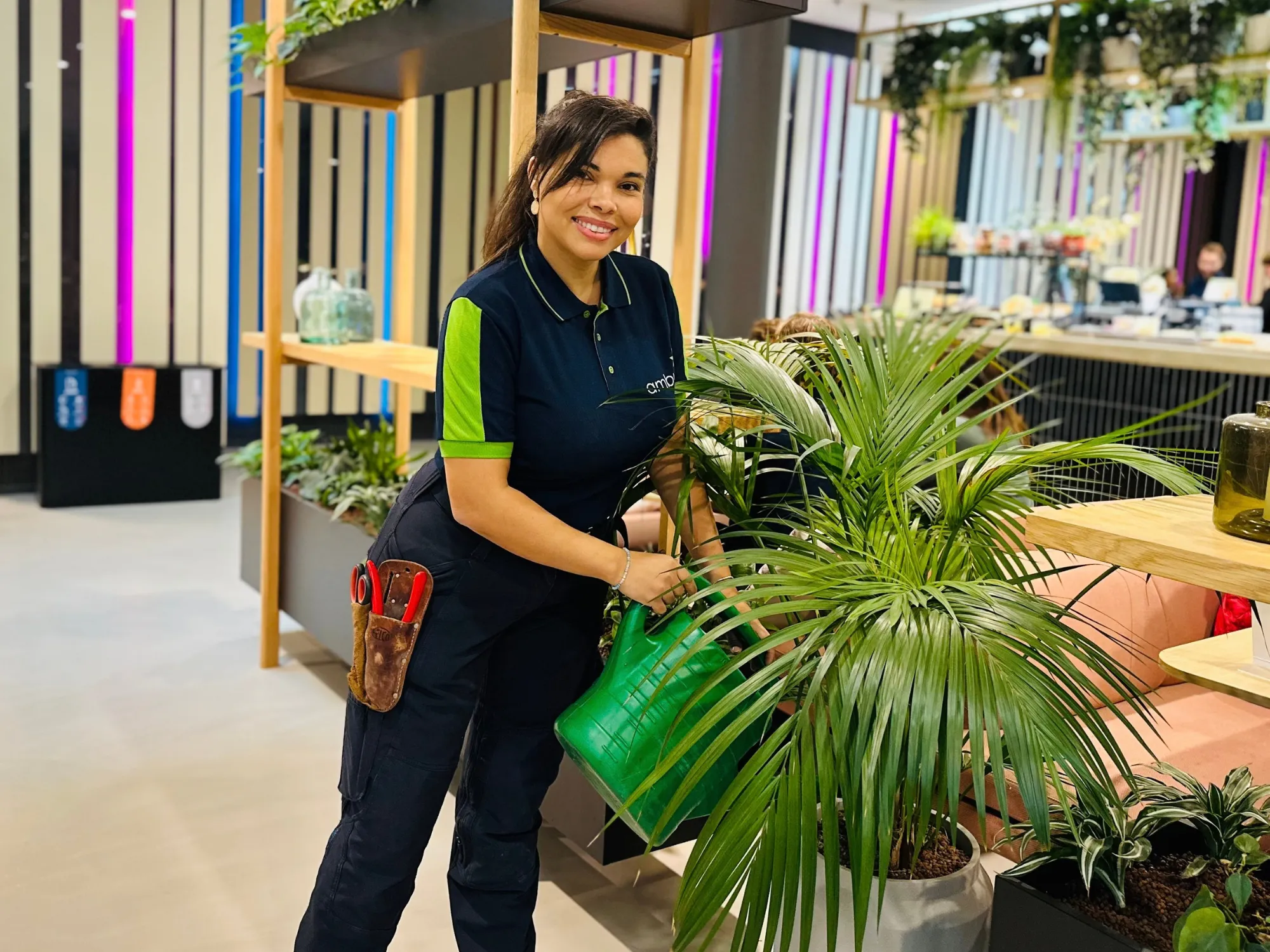
Tip for facility managers: Let colleagues know that a water gauge reading 'MIN' in autumn is actually beneficial for the plant. This prevents well-meaning employees from adding water themselves and causing root damage.
Leaf drop in autumn: a natural recovery process
Is your plant dropping a few more leaves in autumn? In most cases, this is a completely natural process. With reduced daylight, the plant sheds leaves that require too much energy to maintain. As spring approaches and days lengthen, the plant naturally produces fresh green foliage.
How to support your office plants through autumn While professional care and precise watering are handled by our service experts, you can support your office greenery with a few simple adjustments:
-
Maximize natural daylight: Keep blinds, louvres and roller shades fully open during the day so scarce sunlight reaches workspaces.
-
Avoid extra watering: Do not add extra water, even when the water gauge shows a low level. Our service specialists manage the exact dosage during maintenance visits.
-
Unobstructed light: Ensure office cabinets, partitions and mobile displays do not block light reaching the planters.
If you have questions about the plants at your location or are unsure about the placement of a specific planter, feel free to contact your dedicated Ambius service specialist or our customer service team.